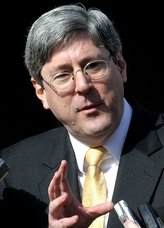
.... if it was foolish to accept the best-case assumptions that led us to invade Iraq, it's also foolish not to question the worst-case assumptions that undergird arguments for staying. Is it possible that a quick withdrawal of U.S. forces will lead to a dramatic worsening of the situation? Of course it is, just as it's possible that maintaining or escalating troops there could fuel the unrest. But it's also worth considering the possibility that the worst may not happen: What if the doomsayers are wrong?....
Will the center hold?
Not only is the worst-case scenario far from a sure thing in the event of an American withdrawal, but there is also a best-case scenario. Precisely because the idea of all-out civil war and a regional blowup involving Iran, Saudi Arabia, and Turkey is so horrifying, all the political forces inside and outside Iraq have many incentives not to go there....
Contrary to the conventional wisdom in Washington, Iraq is not a make-believe state cobbled together after World War I, but a nation united by the Tigris and Euphrates rivers, just as the Nile unites Egypt. Historically, the vast majority of Iraqis have not primarily identified themselves according to their sect, as Sunnis or Shiites. Of course, as the civil war escalates, more Iraqis are identifying by sect, and tensions are worsening. But it is not too late to resurrect some of the comity that once existed. The current war is not a conflict between all Sunnis and all Shiites, but a violent clash of extremist paramilitary armies. Most Iraqis do not support the extremists on either side. According to a poll conducted in June 2006 by the International Republican Institute, "seventy-eight per cent of Iraqis, including a majority of Shiites, opposed the division of Iraq along ethnic and sectarian lines."
In addition, the country's vast oil reserves, conceivably the world's largest, could help hold Iraq together. Iraqi politicians are currently devising a law that would ratify the central government's control of all of the country's oil wealth. Even the corruption that now cripples Iraq tethers Iraqi political leaders to the central government and to the idea of Iraq as a nation-state. "None of the big players really want civil war," says an Iraqi military official closely affiliated with Ahmad Chalabi's Iraqi National Congress. "None of them want to give up the regular flow of funds that they get now from corruption."
What most Iraqis do seem to want, according to numerous polls, is for American forces to leave. Even within the current, skewed Iraqi political system, a majority of Iraq's parliament supports a U.S. withdrawal. If we add to the mix the powerful Sunni-led resistance, including former Baathists, Sunni nationalists, and tribes, an overwhelming majority wants to end the occupation.
It is clear that there are many features of Iraq's current landscape that lend themselves to the eventual creation of a stable, postwar nation -- although rebuilding the country will take generations. It is, at this point, the best we can hope for. Like all best-case scenarios, it might or might not happen. But the very same can be said of the worst-case scenario -- a scenario that war hawks portray as a certainty and wave, like a bloody shirt, to scare decision-makers and members of Congress into supporting a failed strategy.
Monday, February 19, 2007


Al QAEDA CHIEFS ARE SEEN TO REGAIN POWER
By MARK MAZZETTI and DAVID ROHDE THE NEW YORK TIMES
WASHINGTON, Feb. 18 — ....Until recently, the Bush administration had described Mr. bin Laden and Mr. Zawahri as detached from their followers and cut off from operational control of Al Qaeda.
(However)...The United States has also identified several new Qaeda compounds in North Waziristan, including one that officials said might be training operatives for strikes against targets beyond Afghanistan....American officials say that the new intelligence is focused on Al Qaeda and points to the prospect that the terrorist network is gaining in strength despite more than five years of a sustained American-led campaign to weaken it.
.... recent intelligence describes the organization’s hierarchy as intact and strengthening. “The chain of command has been re-established,” said one American government official, who said that the Qaeda “leadership command and control is robust.”
In the past, statements issued by Mr. bin Laden and Mr. Zawahri referred to events that were sometimes several weeks old, one official said, suggesting that the men had difficulty creating a secure means of distributing the tapes. Now, the statements are more current, at times referring to events that occurred days earlier.
American intelligence and counterterrorism officials said that most of the men receiving training in Pakistan had been carrying out attacks inside Afghanistan, but that Al Qaeda had also strengthened its ties to groups in Iraq that had sworn allegiance to Mr. bin Laden. They said dozens of seasoned fighters were moving between Pakistan and Iraq, apparently engaging in an “exchange of best practices” for attacking American forces.
Officials said that over the past year, Al Qaeda had also shown an increased international capability, citing as an example its alliance with the Salafist Group for Preaching and Combat, an Algerian-based group that has carried out a series of attacks in recent months. Last fall, the Algerian group renamed itself Al Qaeda of the Islamic Maghreb. Officials in Washington say they believe that the group is linked to a recent string of sophisticated car bombings and other attacks in Algeria, including a December attack on a bus carrying Halliburton contractors.
WASHINGTON, Feb. 18 — ....Until recently, the Bush administration had described Mr. bin Laden and Mr. Zawahri as detached from their followers and cut off from operational control of Al Qaeda.
(However)...The United States has also identified several new Qaeda compounds in North Waziristan, including one that officials said might be training operatives for strikes against targets beyond Afghanistan....American officials say that the new intelligence is focused on Al Qaeda and points to the prospect that the terrorist network is gaining in strength despite more than five years of a sustained American-led campaign to weaken it.
.... recent intelligence describes the organization’s hierarchy as intact and strengthening. “The chain of command has been re-established,” said one American government official, who said that the Qaeda “leadership command and control is robust.”
Officials said that both American and foreign intelligence services had collected evidence leading them to conclude that at least one of the camps in Pakistan might be training operatives capable of striking Western targets. A particular concern is that the camps are frequented by British citizens of Pakistani descent who travel to Pakistan on British passports.
In the past, statements issued by Mr. bin Laden and Mr. Zawahri referred to events that were sometimes several weeks old, one official said, suggesting that the men had difficulty creating a secure means of distributing the tapes. Now, the statements are more current, at times referring to events that occurred days earlier.
American intelligence and counterterrorism officials said that most of the men receiving training in Pakistan had been carrying out attacks inside Afghanistan, but that Al Qaeda had also strengthened its ties to groups in Iraq that had sworn allegiance to Mr. bin Laden. They said dozens of seasoned fighters were moving between Pakistan and Iraq, apparently engaging in an “exchange of best practices” for attacking American forces.
Officials said that over the past year, Al Qaeda had also shown an increased international capability, citing as an example its alliance with the Salafist Group for Preaching and Combat, an Algerian-based group that has carried out a series of attacks in recent months. Last fall, the Algerian group renamed itself Al Qaeda of the Islamic Maghreb. Officials in Washington say they believe that the group is linked to a recent string of sophisticated car bombings and other attacks in Algeria, including a December attack on a bus carrying Halliburton contractors.
Saturday, February 17, 2007
RICE RESPONDS TO AMERICAN PUBLIC'S QUESTIONS ABOUT IRAQ WAR
"Some of the debate in Washington is in fact indicative of the concerns that some of the American people have for the prospects of success if the Iraqi government doesn't do what it has said it will do," Rice said. Rice asserted that the coordinated U.S.-Iraq sweep against militant factions is bringing "a new hope and a new optimism" to Baghdad. She said she hopes the crackdown in a capital weary of violence will provide an incentive for political progress...
In meetings with Iraq's fragile and often divided U.S.-backed government, Rice stressed the need for political and economic progress alongside security gains. Rice said she hopes the security sweep "may have now a little bit of a spur to some other things as well."
The U.S. has urged the government to move more quickly on benchmarks such as a national law governing the distribution of oil wealth. Iraqi leaders informed her that the oil deal was almost done, but Rice later told reporters she has heard that before. The secretary said she made clear to Iraqi officials that she hopes this time it is for real.
"The oil law is a proxy for something much larger," Rice said. "It's really important that they complete it, but it's also important that they have made progress."
In meetings with Iraq's fragile and often divided U.S.-backed government, Rice stressed the need for political and economic progress alongside security gains. Rice said she hopes the security sweep "may have now a little bit of a spur to some other things as well."
The U.S. has urged the government to move more quickly on benchmarks such as a national law governing the distribution of oil wealth. Iraqi leaders informed her that the oil deal was almost done, but Rice later told reporters she has heard that before. The secretary said she made clear to Iraqi officials that she hopes this time it is for real.
"The oil law is a proxy for something much larger," Rice said. "It's really important that they complete it, but it's also important that they have made progress."
NEWSWEEK SEEKS TO ANSWER QUD QUESTION

The confusion over the Quds Force—what exactly they’re doing in Iraq and how they came to be there—has created a dangerous ambiguity about the Iranian operatives who are now being targeted by U.S. forces. That became clear late last year when key Iraqi politicians complained that U.S. troops had arrested two Iranians who were guests of the Iraqi government.... Iraqi Prime Minister Nuri al-Maliki “wanted Iran’s help and said you can influence this issue," Ameri said in an interview. “This led to the Iranians sending the group with the diplomatic passports.” He added: “They had a meeting with me and we talked about how to put pressure on the Jaish Mahdi [Mahdi Army] not to attack Sunnis … how to prevent the Jaish Mahdi from working against the government and not to raise their weapons illegally.”
Today, the broader U.S. intelligence community, including the CIA and the Directorate of National Intelligence—which nominally oversees the agency—seems to have reached a consensus that the ordnance on display in the Baghdad slide show was made in Iran and transported over the border somehow by the Quds Force....But the documentation remains scant. And considerable doubts continue to surface about the intelligence presented at the Baghdad slide show, including the fact that the writing on the conventional weapons displayed was in English, not Farsi. U.N. Ambassador Zarif also says that the date markings are American-style—that is, the month comes first. “There is every reason to believe that this evidence is fabricated,” he said. U.S. officials say the weapons were apparently built for the international market....
Today, the broader U.S. intelligence community, including the CIA and the Directorate of National Intelligence—which nominally oversees the agency—seems to have reached a consensus that the ordnance on display in the Baghdad slide show was made in Iran and transported over the border somehow by the Quds Force....But the documentation remains scant. And considerable doubts continue to surface about the intelligence presented at the Baghdad slide show, including the fact that the writing on the conventional weapons displayed was in English, not Farsi. U.N. Ambassador Zarif also says that the date markings are American-style—that is, the month comes first. “There is every reason to believe that this evidence is fabricated,” he said. U.S. officials say the weapons were apparently built for the international market....
Friday, February 16, 2007
THE POWER AND THE GLORY: A VIEW OF RUMSFELD BY ROGER MORRIS
Rumsfeld: (He began) a stint in 1983-1984 as special presidential envoy to the Middle East.
He worked to shower on Saddam (in a manner as unnoticed as possible) an infamous flow of intelligence, financial credits, and sensitive materials and technology that would come to underpin Iraqi chemical and bacteriological warfare programs, leading to hideous gas attacks on Shia dissidents and Kurds as well as the Iranian forces. In general, Rumsfeld put his shoulder to the wheel to shore up the war-worn Ba'athist regime that had attacked Iran in 1980.
As Secretary of Defense to George Bush: As no other cabinet officer in history, he turned over crucial, self-sustaining functions of his department to privateers and private armies. He surrendered vital supply and commissariat services for the American military to profit-plundering contractors for whom U.S. forces were neither fellow warriors, nor even share-holders, but captive "customers" to be treated with the offhandedness afforded by guaranteed contracts. He ceded security and combat functions essential to the national mission to a corps of thousands of hired guns whose qualifications, standards of conduct and ultimate loyalty -- all integral to the safety and success of American forces -- were beyond effective governmental control or measure.
As no other cabinet officer in history, he squandered the integrity of his department and the unique, indispensable code of honor of its services. He joined, and often led, the rest of an intellectually degraded administration, heedless of Constitutional and human rights, in violating the very heart of their ostensibly conservative convictions. With the ready sanctioning, and then de facto cover-up of torture and abuse at Abu Ghraib, Guantanamo, and the less noticed but equally gruesome prisons at Bagram Air Base and elsewhere in Afghanistan, he changed, for untold millions, the symbol of America and its once-proud military from freedom and the rule of law to the unforgettable prisoner's hood and shackles. Rumsfeld's impact would not vanish with terms of office or elections
....Weeks after Rumsfeld's departure, history -- the little ever really known or understood -- was already being waved off, forgotten. The past was too complicated and troublesome, too guilt-ridden and close to home, too filled with chilling consequences.
He worked to shower on Saddam (in a manner as unnoticed as possible) an infamous flow of intelligence, financial credits, and sensitive materials and technology that would come to underpin Iraqi chemical and bacteriological warfare programs, leading to hideous gas attacks on Shia dissidents and Kurds as well as the Iranian forces. In general, Rumsfeld put his shoulder to the wheel to shore up the war-worn Ba'athist regime that had attacked Iran in 1980.
As Secretary of Defense to George Bush: As no other cabinet officer in history, he turned over crucial, self-sustaining functions of his department to privateers and private armies. He surrendered vital supply and commissariat services for the American military to profit-plundering contractors for whom U.S. forces were neither fellow warriors, nor even share-holders, but captive "customers" to be treated with the offhandedness afforded by guaranteed contracts. He ceded security and combat functions essential to the national mission to a corps of thousands of hired guns whose qualifications, standards of conduct and ultimate loyalty -- all integral to the safety and success of American forces -- were beyond effective governmental control or measure.
As no other cabinet officer in history, he squandered the integrity of his department and the unique, indispensable code of honor of its services. He joined, and often led, the rest of an intellectually degraded administration, heedless of Constitutional and human rights, in violating the very heart of their ostensibly conservative convictions. With the ready sanctioning, and then de facto cover-up of torture and abuse at Abu Ghraib, Guantanamo, and the less noticed but equally gruesome prisons at Bagram Air Base and elsewhere in Afghanistan, he changed, for untold millions, the symbol of America and its once-proud military from freedom and the rule of law to the unforgettable prisoner's hood and shackles. Rumsfeld's impact would not vanish with terms of office or elections
....Weeks after Rumsfeld's departure, history -- the little ever really known or understood -- was already being waved off, forgotten. The past was too complicated and troublesome, too guilt-ridden and close to home, too filled with chilling consequences.
Thursday, February 15, 2007
MAHDI ARMY LEADERS ORDERED OUT OF IRAQ
From correspondents in Baghdad, February 16, 2007
Top members of Iraq's biggest Shiite militia, the Mahdi Army, have been ordered by their own leadership to leave Iraq, President Jalal Talabani said today. Mr Talabani said the Mahdi Army's leader, radical cleric Moqtada al-Sadr, wanted to see a new Baghdad security plan succeed and had given the go ahead for security forces to arrest any militia leaders who resist it. "I think that many senior officials of the Jaish al-Mahdi have received an order to leave Iraq to facilitate the mission of the Iraqi security forces to carry out their plan," Mr Talabani said.
"Moqtada al-Sadr is keen to stabilise the situation and see the security plan succeed in Iraq and he gave the green light to the government to arrest anyone breaking the law, and this is a positive attitude."
The Iraqi leader was speaking after a meeting with Prime Minister Nuri al-Maliki, one day after the formal launch of an operation to drive sectarian militias out of Baghdad, amid reports that Sadr has left Iraq for Iran.
"I have no information about the whereabouts of Moqtada al-Sadr," Mr Talabani said.
Earlier, a top aide to Mr Maliki had confirmed a report from US military spokesman Major General William Caldwell that Sadr had left Iraq for Iran, a claim fiercely disputed by the firebrand cleric's supporters.
Top members of Iraq's biggest Shiite militia, the Mahdi Army, have been ordered by their own leadership to leave Iraq, President Jalal Talabani said today. Mr Talabani said the Mahdi Army's leader, radical cleric Moqtada al-Sadr, wanted to see a new Baghdad security plan succeed and had given the go ahead for security forces to arrest any militia leaders who resist it. "I think that many senior officials of the Jaish al-Mahdi have received an order to leave Iraq to facilitate the mission of the Iraqi security forces to carry out their plan," Mr Talabani said.
"Moqtada al-Sadr is keen to stabilise the situation and see the security plan succeed in Iraq and he gave the green light to the government to arrest anyone breaking the law, and this is a positive attitude."
The Iraqi leader was speaking after a meeting with Prime Minister Nuri al-Maliki, one day after the formal launch of an operation to drive sectarian militias out of Baghdad, amid reports that Sadr has left Iraq for Iran.
"I have no information about the whereabouts of Moqtada al-Sadr," Mr Talabani said.
Earlier, a top aide to Mr Maliki had confirmed a report from US military spokesman Major General William Caldwell that Sadr had left Iraq for Iran, a claim fiercely disputed by the firebrand cleric's supporters.
Wednesday, February 14, 2007
WHITE HOUSE OPENS DOORS TO IRAQ REFUGEES
February 14, 2007
WASHINGTON (AP) -- More Iraqi refugees will be allowed into the United States.
The Bush administration will allow 7,000 Iraqi refugees into the country over the next year.
There have been only 463 allowed since the war began in March 2003.
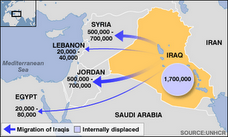
Nearly 4 million Iraqis have fled their country during the war.
The U.S. is facing mounting international pressure to help more of them. The United Nations High Commissioner for Refugees is asking for $60 million in aid from nations around the world. The U.S. will pledge $18 million to a relief and resettlement program.
WASHINGTON (AP) -- More Iraqi refugees will be allowed into the United States.
The Bush administration will allow 7,000 Iraqi refugees into the country over the next year.
There have been only 463 allowed since the war began in March 2003.
Nearly 4 million Iraqis have fled their country during the war.
The U.S. is facing mounting international pressure to help more of them. The United Nations High Commissioner for Refugees is asking for $60 million in aid from nations around the world. The U.S. will pledge $18 million to a relief and resettlement program.
Tuesday, February 13, 2007
AL-MALIKI TIGHTENING SECURITY IN IRAQ
The Iraq PM imposes night curfew, arms ban, ensures safe return for refugees
BAGHDAD, Feb 13 (KUNA) -- The Iraqi authorities decided Tuesday to impose night curfew from 8:00 pm to 6:00 am on individuals and vehicles in Baghdad operations area.The exact starting time of the curfew will be announced soon, Baghdad Military Commander General Abbod Kanbar quoted Iraqi Prime Minister and Supreme Commander of the Armed Forces Nouri Al-Maliki as saying in a statement here Tuesday.... The act provides for tough punishment for criminal and terrorist acts such as murder, stealth, rape, abduction, ravage of public or private properties, bombing, and possession of military arms or explosives.Al-Maliki's decree reasserted respect for the sanctity of all places of worship. However, it did not rule out possibility of breaking into them by security forces when necessary. Meanwhile, the new security plan included a program ensuring safe return of Iraqi refugees and displaced persons and punishing occupants of their houses.Occupants of the houses of refugees and displaced persons have 15 days to evacuate the houses as from now and return them to their original owners, otherwise they will face tough penalties under the Iraqi Terrorism Act, Al-Maliki warned. Ad hoc committees will be set up soon to verify the ownership documents of houses and properties of refugees and displaced persons.In his decree, Al-Maliki urged the Iraqi military and police forces to take into account the human rights while implementing the new security plan and asked the Baghdad Operations Commander to brief him weekly on the new developments.
BAGHDAD, Feb 13 (KUNA) -- The Iraqi authorities decided Tuesday to impose night curfew from 8:00 pm to 6:00 am on individuals and vehicles in Baghdad operations area.The exact starting time of the curfew will be announced soon, Baghdad Military Commander General Abbod Kanbar quoted Iraqi Prime Minister and Supreme Commander of the Armed Forces Nouri Al-Maliki as saying in a statement here Tuesday.... The act provides for tough punishment for criminal and terrorist acts such as murder, stealth, rape, abduction, ravage of public or private properties, bombing, and possession of military arms or explosives.Al-Maliki's decree reasserted respect for the sanctity of all places of worship. However, it did not rule out possibility of breaking into them by security forces when necessary. Meanwhile, the new security plan included a program ensuring safe return of Iraqi refugees and displaced persons and punishing occupants of their houses.Occupants of the houses of refugees and displaced persons have 15 days to evacuate the houses as from now and return them to their original owners, otherwise they will face tough penalties under the Iraqi Terrorism Act, Al-Maliki warned. Ad hoc committees will be set up soon to verify the ownership documents of houses and properties of refugees and displaced persons.In his decree, Al-Maliki urged the Iraqi military and police forces to take into account the human rights while implementing the new security plan and asked the Baghdad Operations Commander to brief him weekly on the new developments.
UNITED NATIONS POLICY FORUM RAISES ISSUE OF INTERNATIONAL LAW (DRAFT FORM)
When we identify positively an enemy target, we're going to go ahead and take it out with every means we have available. I like to remember what Viscount Slim said during the Burma campaign. He said, "Use a sledgehammer to crush a walnut." And that's exactly what we will do. We will use force, overwhelming combat power when it's necessary. - US Major General Charles H. Swannack Jr.
War and Occupation in Iraq
UNITED NATIONS, Global Policy Forum, February 2007
Conclusion to Global Policy, Section entitled: Attacks on Cities report on Iraq
International law sets clear standards for the conduct of military operations. The Geneva Conventions prohibit attacks which do not clearly distinguish between military targets and civilians, or have a disproportionate impact on civilians. Coalition military operations have clearly violated these laws, with massive displacement of populations, indiscriminate killings of civilians, and large-scale destruction of habitation and urban infrastructure, including historic buildings and religious sites. Coalition forces have violated further provisions of the Conventions by deliberately targeting hospitals, stopping emergency medical care and blocking the delivery of humanitarian aid. In further violation of the prohibition of “siege tactics,” they have deprived civilians of food, water, electricity, medical supplies and vital services. Such practices have inflicted collective punishment on Iraqis. Taken together they represent a grave violation of international humanitarian law.
Full report in draft form: http://www.globalpolicy.org/security/issues/iraq/occupation/report/index.htm
War and Occupation in Iraq
UNITED NATIONS, Global Policy Forum, February 2007
Conclusion to Global Policy, Section entitled: Attacks on Cities report on Iraq
International law sets clear standards for the conduct of military operations. The Geneva Conventions prohibit attacks which do not clearly distinguish between military targets and civilians, or have a disproportionate impact on civilians. Coalition military operations have clearly violated these laws, with massive displacement of populations, indiscriminate killings of civilians, and large-scale destruction of habitation and urban infrastructure, including historic buildings and religious sites. Coalition forces have violated further provisions of the Conventions by deliberately targeting hospitals, stopping emergency medical care and blocking the delivery of humanitarian aid. In further violation of the prohibition of “siege tactics,” they have deprived civilians of food, water, electricity, medical supplies and vital services. Such practices have inflicted collective punishment on Iraqis. Taken together they represent a grave violation of international humanitarian law.
Full report in draft form: http://www.globalpolicy.org/security/issues/iraq/occupation/report/index.htm
Monday, February 12, 2007
IRAN WAR REDO? National Security Director for Iranian and Persian Gulf Affairs Says Bush is seeking war.
Ex-Bush Iran official: US seeks pretext for conflict with Iran
Monday February 12, 2007
A former top Bush administration official for Persian Gulf affairs has said in an interview this morning on CNN that the US may be trying to spark a conflict with Iran.
Hillary Mann is the former National Security Council Director for Iranian and Persian Gulf Affairs. She warned in the interview that the recent flare up between Iran and the US over the former's alleged assistance to Shi'a militias results from a US desire to provoke conflict with the Iranians.
http://www.rawstory.com/news/2007/Frm._Bush_NSC_Dir._says_US_0212.html
Exclusive Commentary IRAN REDO?
By Christopher Dickey Newsweek
Updated: 3:45 p.m.
Feb. 12, 2007 - During America’s last and largely forgotten war with Iran, in 1987 and 1988, music meant a lot to those of us in the middle of the action. American warships had deployed in force to the Persian Gulf and the Arabian Sea. Ostensibly they were there to protect Kuwaiti oil tankers from marauding Iranian frigates and speedboats, but in fact they were backing Saddam Hussein in the seemingly endless Iran-Iraq war. “Somebody’s gonna hurt someone, before the night is through,” The Eagles had sung in “Heartache Tonight,” which became a kind of anthem to reporters covering the war. “Somebody’s gonna come undone, there’s nothin’ we can do.”
Monday February 12, 2007
A former top Bush administration official for Persian Gulf affairs has said in an interview this morning on CNN that the US may be trying to spark a conflict with Iran.
Hillary Mann is the former National Security Council Director for Iranian and Persian Gulf Affairs. She warned in the interview that the recent flare up between Iran and the US over the former's alleged assistance to Shi'a militias results from a US desire to provoke conflict with the Iranians.
http://www.rawstory.com/news/2007/Frm._Bush_NSC_Dir._says_US_0212.html
Exclusive Commentary IRAN REDO?
By Christopher Dickey Newsweek
Updated: 3:45 p.m.
Feb. 12, 2007 - During America’s last and largely forgotten war with Iran, in 1987 and 1988, music meant a lot to those of us in the middle of the action. American warships had deployed in force to the Persian Gulf and the Arabian Sea. Ostensibly they were there to protect Kuwaiti oil tankers from marauding Iranian frigates and speedboats, but in fact they were backing Saddam Hussein in the seemingly endless Iran-Iraq war. “Somebody’s gonna hurt someone, before the night is through,” The Eagles had sung in “Heartache Tonight,” which became a kind of anthem to reporters covering the war. “Somebody’s gonna come undone, there’s nothin’ we can do.”
AND FROM THE MARCH ISSUE OF VANITY FAIR:
http://www.vanityfair.com/politics/features/2007/03/whitehouse200703?printable=true¤tPage=all
....the vice president's daughter Elizabeth Cheney, who—as principal deputy assistant secretary of state for Near Eastern affairs and coordinator for broader Middle East and North Africa initiatives—plays a key role in the Bush administration's policy in the region. According to the Financial Times, Elizabeth Cheney, who has been on maternity leave since May, had supervised the State Department's Iran-Syria Operations Group, created last spring to plot a strategy to democratize those two "rogue" states. One of her responsibilities was to oversee a projected $85 million program to produce anti-Iran propaganda and support dissidents.
IRAQ HITS HOME IN ATLANTA
Blogwatch: About an e-mail from Iraq, Monday, February 12, 2007, 09:13 AM
The Atlanta Journal-Constitution
Through the weekend, the blogs talked of the Job-like speech in the House on Friday by freshman state Rep. Mike Glanton (D-Jonesboro), whose daughter Latisha is an Army sergeant in Iraq.
We have the audio for you here. Blog for Democracy was kind enough to provide a link to the video. The Glanton speech begins at about the 43rd minute. (Actually 43:45, and you can scroll it forward with your mouse...)
Glanton begins as a lonely figure at the rostrum. By the time he’s finished, half the chamber is gathered at his side.
The Atlanta Journal-Constitution
Through the weekend, the blogs talked of the Job-like speech in the House on Friday by freshman state Rep. Mike Glanton (D-Jonesboro), whose daughter Latisha is an Army sergeant in Iraq.
We have the audio for you here. Blog for Democracy was kind enough to provide a link to the video. The Glanton speech begins at about the 43rd minute. (Actually 43:45, and you can scroll it forward with your mouse...)
Glanton begins as a lonely figure at the rostrum. By the time he’s finished, half the chamber is gathered at his side.
IRAN REJECTS US ALLEGATIONS IT ARMED IRAQ INSURGENTS
 WASHINGTON (AFP) - Iranian President Mahmoud Ahmadinejad has said his country wants to avoid conflict and called for the withdrawal of US and other foreign forces from Iraq is the only way to ensure peace there.
"We shy away from any kind of conflict, any kind of bloodshed," Ahmadinejad told ABC television Monday.
The Iranian leader, whose country has been accused of stoking sectarian violence in Iraq, said instability there would hurt all countries in the region.
"That's why we're opposed to the presence of Americans," he said. "We tell them to leave the country and any other foreigner should leave the country and there should be none in Iraq, and you see, we will have peace in Iraq." US OFFICIALS IN BAGHDAD CLAIM OTHERWISE...

The U.S. officials in Baghdad claimed the EFPs, as well as Iranian-made mortar shells and rocket-propelled grenades, have been supplied to “rogue elements” of the Mahdi Army militia of anti-American Shiite cleric Muqtada al-Sadr, who is a key backer of Shiite Prime Minister Nouri al-Maliki.
Skepticism in U.S.: Many key government figures and members of Iraq’s Shiite political leadership have deep ties to Iran, having spent decades there in exile during Saddam Hussein’s rule. But Iran has repeatedly denied that it has armed the Shiite militias in the neighboring country.
Skeptical congressional Democrats said the Bush administration should move cautiously before accusing Iran of fomenting a campaign of violence against U.S. troops in Iraq. Senate Intelligence Committee member Ron Wyden, D-Ore., said “the administration is engaged in a drumbeat with Iran that is much like the drumbeat that they did with Iraq. We’re going to insist on accountability.”
On the Republican side, Sen. Trent Lott of Mississippi said he did not think the United States was trying to make a case for attacking Iran. Lott said the U.S. should try to stop the flow of munitions through Iran to Iraq but that “you do that by interdiction ... you don’t do it by invasion.”
Skeptical congressional Democrats said the Bush administration should move cautiously before accusing Iran of fomenting a campaign of violence against U.S. troops in Iraq. Senate Intelligence Committee member Ron Wyden, D-Ore., said “the administration is engaged in a drumbeat with Iran that is much like the drumbeat that they did with Iraq. We’re going to insist on accountability.”
On the Republican side, Sen. Trent Lott of Mississippi said he did not think the United States was trying to make a case for attacking Iran. Lott said the U.S. should try to stop the flow of munitions through Iran to Iraq but that “you do that by interdiction ... you don’t do it by invasion.”
Sunday, February 11, 2007
The Mission Can't Be Accomplished -- It's Time for a New Strategy
VICTORY IS NOT AN OPTION, William Odem, Washington Post For the moment, the collision of the public's clarity of mind, the president's relentless pursuit of defeat and Congress's anxiety has paralyzed us. We may be doomed to two more years of chasing the mirage of democracy in Iraq and possibly widening the war to Iran. But this is not inevitable. A Congress, or a president, prepared to quit the game of "who gets the blame" could begin to alter American strategy in ways that will vastly improve the prospects of a more stable Middle East. No task is more important to the well-being of the United States. We face great peril in that troubled region, and improving our prospects will be difficult. First of all, it will require, from Congress at least, public acknowledgment that the president's policy is based on illusions, not realities. There never has been any right way to invade and transform Iraq. Most Americans need no further convincing, but two truths ought to put the matter beyond question:
First, the assumption that the United States could create a liberal, constitutional democracy in Iraq defies just about everything known by professional students of the topic. Of the more than 40 democracies created since World War II, fewer than 10 can be considered truly "constitutional" -- meaning that their domestic order is protected by a broadly accepted rule of law, and has survived for at least a generation. None is a country with Arabic and Muslim political cultures. None has deep sectarian and ethnic fissures like those in Iraq.
Strangely, American political scientists whose business it is to know these things have been irresponsibly quiet. In the lead-up to the March 2003 invasion, neoconservative agitators shouted insults at anyone who dared to mention the many findings of academic research on how democracies evolve. They also ignored our own struggles over two centuries to create the democracy Americans enjoy today. Somehow Iraqis are now expected to create a constitutional order in a country with no conditions favoring it.
This is not to say that Arabs cannot become liberal democrats. When they immigrate to the United States, many do so quickly. But it is to say that Arab countries, as well as a large majority of all countries, find creating a stable constitutional democracy beyond their capacities. Second, to expect any Iraqi leader who can hold his country together to be pro-American, or to share American goals, is to abandon common sense. It took the United States more than a century to get over its hostility toward British occupation. (In 1914, a majority of the public favored supporting Germany against Britain.) Every month of the U.S. occupation, polls have recorded Iraqis' rising animosity toward the United States. Even supporters of an American military presence say that it is acceptable temporarily and only to prevent either of the warring sides in Iraq from winning. Today the Iraqi government survives only because its senior members and their families live within the heavily guarded Green Zone, which houses the U.S. Embassy and military command. ...The first and most critical step is to recognize that fighting on now simply prolongs our losses and blocks the way to a new strategy. Getting out of Iraq is the pre-condition for creating new strategic options. Withdrawal will take away the conditions that allow our enemies in the region to enjoy our pain. It will awaken those European states reluctant to collaborate with us in Iraq and the region. read more by clicking headline William E. Odom, a retired Army lieutenant general, was head of Army intelligence and director of the National Security Agency under Ronald Reagan. He served on the National Security Council staff under Jimmy Carter. A West Point graduate with a PhD from Columbia, Odom teaches at Yale and is a fellow of the Hudson Institute.
First, the assumption that the United States could create a liberal, constitutional democracy in Iraq defies just about everything known by professional students of the topic. Of the more than 40 democracies created since World War II, fewer than 10 can be considered truly "constitutional" -- meaning that their domestic order is protected by a broadly accepted rule of law, and has survived for at least a generation. None is a country with Arabic and Muslim political cultures. None has deep sectarian and ethnic fissures like those in Iraq.
Strangely, American political scientists whose business it is to know these things have been irresponsibly quiet. In the lead-up to the March 2003 invasion, neoconservative agitators shouted insults at anyone who dared to mention the many findings of academic research on how democracies evolve. They also ignored our own struggles over two centuries to create the democracy Americans enjoy today. Somehow Iraqis are now expected to create a constitutional order in a country with no conditions favoring it.
This is not to say that Arabs cannot become liberal democrats. When they immigrate to the United States, many do so quickly. But it is to say that Arab countries, as well as a large majority of all countries, find creating a stable constitutional democracy beyond their capacities. Second, to expect any Iraqi leader who can hold his country together to be pro-American, or to share American goals, is to abandon common sense. It took the United States more than a century to get over its hostility toward British occupation. (In 1914, a majority of the public favored supporting Germany against Britain.) Every month of the U.S. occupation, polls have recorded Iraqis' rising animosity toward the United States. Even supporters of an American military presence say that it is acceptable temporarily and only to prevent either of the warring sides in Iraq from winning. Today the Iraqi government survives only because its senior members and their families live within the heavily guarded Green Zone, which houses the U.S. Embassy and military command. ...The first and most critical step is to recognize that fighting on now simply prolongs our losses and blocks the way to a new strategy. Getting out of Iraq is the pre-condition for creating new strategic options. Withdrawal will take away the conditions that allow our enemies in the region to enjoy our pain. It will awaken those European states reluctant to collaborate with us in Iraq and the region. read more by clicking headline William E. Odom, a retired Army lieutenant general, was head of Army intelligence and director of the National Security Agency under Ronald Reagan. He served on the National Security Council staff under Jimmy Carter. A West Point graduate with a PhD from Columbia, Odom teaches at Yale and is a fellow of the Hudson Institute.
Saturday, February 10, 2007
TARGET IRAN: US ABLE TO STRIKE IN THE SPRING
Despite denials, Pentagon plans for possible attack on nuclear sites are well advanced Ewen MacAskill in Washington, THE GUARDIAN, Saturday February 10, 2007 A second battle group has been ordered to the Gulf and extra missiles have already been sent out. Meanwhile oil is being stockpiled. US preparations for an air strike against Iran are at an advanced stage, in spite of repeated public denials by the Bush administration, according to informed sources in Washington.
The present military build-up in the Gulf would allow the US to mount an attack by the spring. But the sources said that if there was an attack, it was more likely next year, just before Mr Bush leaves office.
Neo-conservatives, particularly at the Washington-based American Enterprise Institute, are urging Mr Bush to open a new front against Iran. So too is the vice-president, Dick Cheney. The state department and the Pentagon are opposed, as are Democratic congressmen and the overwhelming majority of Republicans. The sources said Mr Bush had not yet made a decision. The Bush administration insists the military build-up is not offensive but aimed at containing Iran and forcing it to make diplomatic concessions. The aim is to persuade Tehran to curb its suspect nuclear weapons programme and abandon ambitions for regional expansion. Robert Gates, the new US defence secretary, said yesterday: "I don't know how many times the president, secretary [of state Condoleezza] Rice and I have had to repeat that we have no intention of attacking Iran." But Vincent Cannistraro, a Washington-based intelligence analyst, shared the sources' assessment that Pentagon planning was well under way. "Planning is going on, in spite of public disavowals by Gates. Targets have been selected. For a bombing campaign against nuclear sites, it is quite advanced. The military assets to carry this out are being put in place." He added: "We are planning for war. It is incredibly dangerous."
The present military build-up in the Gulf would allow the US to mount an attack by the spring. But the sources said that if there was an attack, it was more likely next year, just before Mr Bush leaves office.
Neo-conservatives, particularly at the Washington-based American Enterprise Institute, are urging Mr Bush to open a new front against Iran. So too is the vice-president, Dick Cheney. The state department and the Pentagon are opposed, as are Democratic congressmen and the overwhelming majority of Republicans. The sources said Mr Bush had not yet made a decision. The Bush administration insists the military build-up is not offensive but aimed at containing Iran and forcing it to make diplomatic concessions. The aim is to persuade Tehran to curb its suspect nuclear weapons programme and abandon ambitions for regional expansion. Robert Gates, the new US defence secretary, said yesterday: "I don't know how many times the president, secretary [of state Condoleezza] Rice and I have had to repeat that we have no intention of attacking Iran." But Vincent Cannistraro, a Washington-based intelligence analyst, shared the sources' assessment that Pentagon planning was well under way. "Planning is going on, in spite of public disavowals by Gates. Targets have been selected. For a bombing campaign against nuclear sites, it is quite advanced. The military assets to carry this out are being put in place." He added: "We are planning for war. It is incredibly dangerous."
THE POLITICS OF IRAN INTELLIGENCE: NATIONAL JOURNAL
FROM LAURA ROZEN, WAR AND PEACE: a brief excerpt:
Amid the continued political fallout over the faulty intelligence case for going to war in Iraq, the Bush administration is newly cautious about the specific intelligence it plans to present to the public to back up its claims that Iran is fighting a kind of proxy war with the United States in Iraq.
At least twice in the past month, the White House has delayed a PowerPoint presentation initially prepared by the military to detail evidence of suspected Iranian materiel and financial support for militants in Iraq. The presentation was to have been made at a press conference in Baghdad in the first week of February. Officials have set no new date, but they say it could be any day.
Even as U.S. officials in Baghdad were ready to make the case, administration principals in Washington who were charged with vetting the PowerPoint dossier bowed to pressure from the intelligence community and ordered that it be scrubbed again. The officials understand that the press will scrutinize the information intensely, that the intelligence "dots" that the administration has assembled about Iran in Iraq can be connected multiple ways, and that the public is wary of any possible intervention in Iran. "The truth is, quite frankly, we thought the briefing overstated, and we sent it back to get it narrowed and focused on the facts," National Security Adviser Stephen Hadley was quoted as saying by the Los Angeles Times on February 2.
A White House official who declined to be named told National Journal that the presentation was sent "back into the interagency process ... with all the usual agencies involved, both in Washington and Baghdad." ....
Amid the continued political fallout over the faulty intelligence case for going to war in Iraq, the Bush administration is newly cautious about the specific intelligence it plans to present to the public to back up its claims that Iran is fighting a kind of proxy war with the United States in Iraq.
At least twice in the past month, the White House has delayed a PowerPoint presentation initially prepared by the military to detail evidence of suspected Iranian materiel and financial support for militants in Iraq. The presentation was to have been made at a press conference in Baghdad in the first week of February. Officials have set no new date, but they say it could be any day.
Even as U.S. officials in Baghdad were ready to make the case, administration principals in Washington who were charged with vetting the PowerPoint dossier bowed to pressure from the intelligence community and ordered that it be scrubbed again. The officials understand that the press will scrutinize the information intensely, that the intelligence "dots" that the administration has assembled about Iran in Iraq can be connected multiple ways, and that the public is wary of any possible intervention in Iran. "The truth is, quite frankly, we thought the briefing overstated, and we sent it back to get it narrowed and focused on the facts," National Security Adviser Stephen Hadley was quoted as saying by the Los Angeles Times on February 2.
A White House official who declined to be named told National Journal that the presentation was sent "back into the interagency process ... with all the usual agencies involved, both in Washington and Baghdad." ....
Subscribe to:
Posts (Atom)